
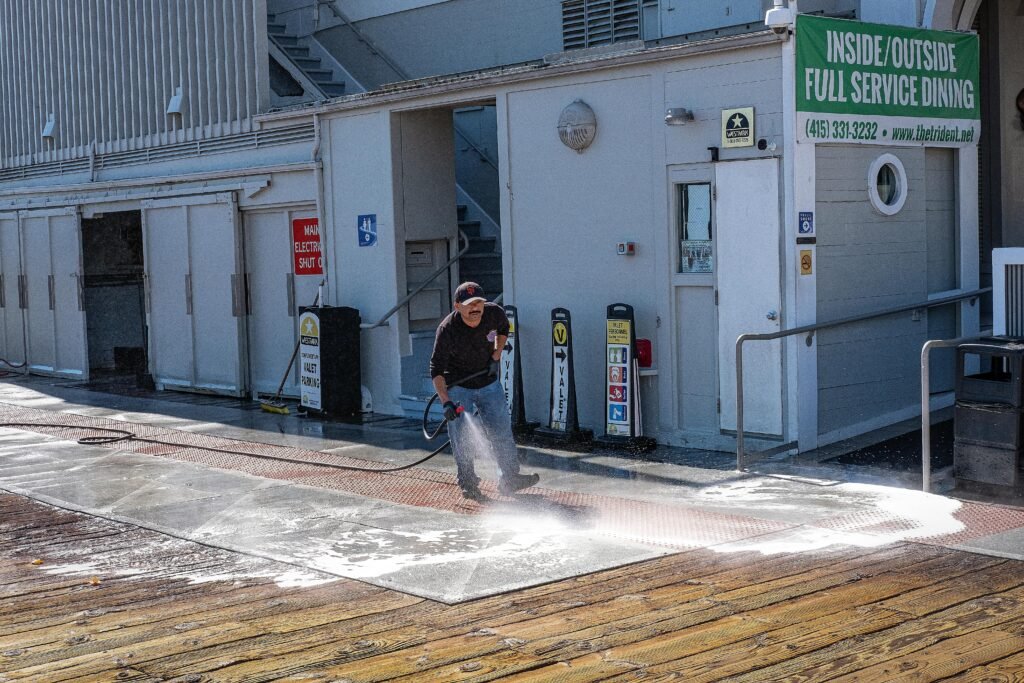
Living in Central Florida means dealing with constant heat, humidity, and heavy rainfall — the perfect environment for algae, mold, and mildew to grow on your home’s exterior. That’s why pressure washing in Clermont FL isn’t just about appearance — it’s essential preventative maintenance.
From green siding stains to slippery driveways and black roof streaks, exterior buildup can damage surfaces, reduce curb appeal, and shorten the life of your home’s materials.
This guide explains everything Clermont homeowners should know about professional pressure washing and soft washing.
Why Homes Need Pressure Washing in Clermont FL
Clermont’s climate creates ideal conditions for organic growth.
Warm temperatures, frequent storms, and moisture trapped in shaded areas allow:
- Algae to stain siding and concrete
- Mold and mildew to spread on walls and fences
- Bacteria to form black streaks on roofs
Unlike regular dirt, these organisms feed on your home’s materials. Over time, they can cause staining, surface breakdown, and premature wear.
What Is Pressure Washing?
Pressure washing uses high-powered water to remove dirt, grime, algae, and buildup from durable surfaces.
It works best on:
- Driveways
- Sidewalks
- Patios
- Brick and stone
When done correctly, pressure washing restores surfaces quickly. When done incorrectly, it can damage siding, strip paint, and etch concrete — which is why professional experience matters.
What Is Soft Washing?
Soft washing is a low-pressure cleaning method that uses specialized solutions to kill algae, mold, and mildew at the source.
Instead of blasting growth off the surface, soft washing treats it, allowing rain and time to rinse away residue naturally. Results last longer because the roots of the growth are eliminated.
Soft washing is used for:
- House siding
- Stucco
- Roofs
- Fences
- Mobile homes
Most vertical surfaces on Clermont homes should be soft washed, not pressure washed.
Pressure Washing vs Soft Washing: Which Do You Need?
| Surface | Best Method |
|---|---|
| Concrete driveways | Pressure washing |
| Vinyl siding | Soft washing |
| Stucco | Soft washing |
| Roof shingles | Soft washing |
| Wood fences | Soft washing |
| Patios & pavers | Pressure washing |
Using the wrong method can cause expensive damage. Professional exterior cleaning matches the method to the material.
How Often Should You Schedule Pressure Washing in Clermont FL
Because of Florida’s climate, most homes benefit from regular cleaning.
Typical schedule:
- House siding: Every 12–18 months
- Roof: Every 2–3 years
- Driveway: Once per year
- Fences: Every 1–2 years
Homes near lakes, wooded areas, or heavy shade may need service more often.
Why Professional Pressure Washing Is Safer Than DIY
Renting a pressure washer may seem simple, but improper use can cause:
- Etched concrete
- Water intrusion behind siding
- Stripped paint
- Damaged window seals
Professionals understand pressure levels, cleaning solutions, and surface requirements — especially in Clermont’s humid environment.
Benefits of Professional Exterior Cleaning
Routine service helps:
- Improve curb appeal
- Extend the life of paint and siding
- Reduce slip hazards on concrete
- Prevent long-term damage from algae and mold
- Maintain property value
Exterior cleaning is preventative maintenance, not just cosmetic work.
Signs You Need Pressure Washing in Clermont FL
Look for:
- Green or black stains on siding
- Slippery driveways or walkways
- Dark streaks on your roof
- Mold on fences or enclosures
- Chalky residue on painted surfaces
These are signs it’s time for professional pressure washing in Clermont FL.
Final Thoughts
With Clermont’s heat and humidity, exterior buildup happens fast. Understanding the difference between pressure washing and soft washing helps protect your home and avoid costly repairs.
Professional exterior cleaning keeps your property looking great while preserving the materials that protect it.